
Some places are not merely destinations; they are repositories of memories. Tirthan Valley is one such place for me.
I spent a part of my childhood in Banjar, along the route to Jibhi. I still vividly remember the little incidents, the familiar faces, and the simplicity of life in those days. Back then, tourism was hardly a consideration in this part of Himachal Pradesh.
Today, things have changed considerably. Winding mountain roads, impressive tunnels, and improved connectivity have brought these beautiful valleys closer to travelers.
Yet, beyond the infrastructure and growing popularity, Tirthan and Sainj continue to offer something special: pristine landscapes, traditional village life, and an opportunity to experience the quieter side of Himachal Pradesh.
Table of Contents
My childhood was spent in Banjar, along the route to Jibhi. I have vivid memories of tumbling down the stairs numerous times in the rented accommodation where we resided. Fortunately, each time, the damage was reparable, thanks to divine providence!
One particular memory still stands out. I would wave goodbye to a familiar HRTC bus driver from our second-floor window, using the simple gestures that we had developed to communicate with him. His bus sported a distinctive red crown atop its front, making it easily recognizable.
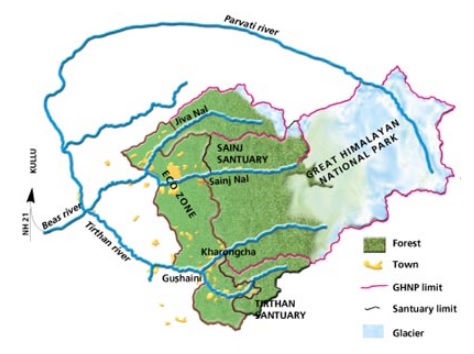
Back then, Tirthan Valley exuded an even more pristine and untouched beauty. Tourism in this region was scarcely considered, although the Great Himalayan National Park (GHNP) had been established as far back as 1964.
Tirthan & Sainj Valleys
The Tirthan and Sainj valleys are interconnected by the Great Himalayan National Park (GHNP). Both valleys have a low population density. In the year 2000, residents of Sainj Valley were fortunate to secure employment in the Parvati hydroelectric project, while those from Tirthan Valley continued to rely on the forest until tourism began to flourish in the area.
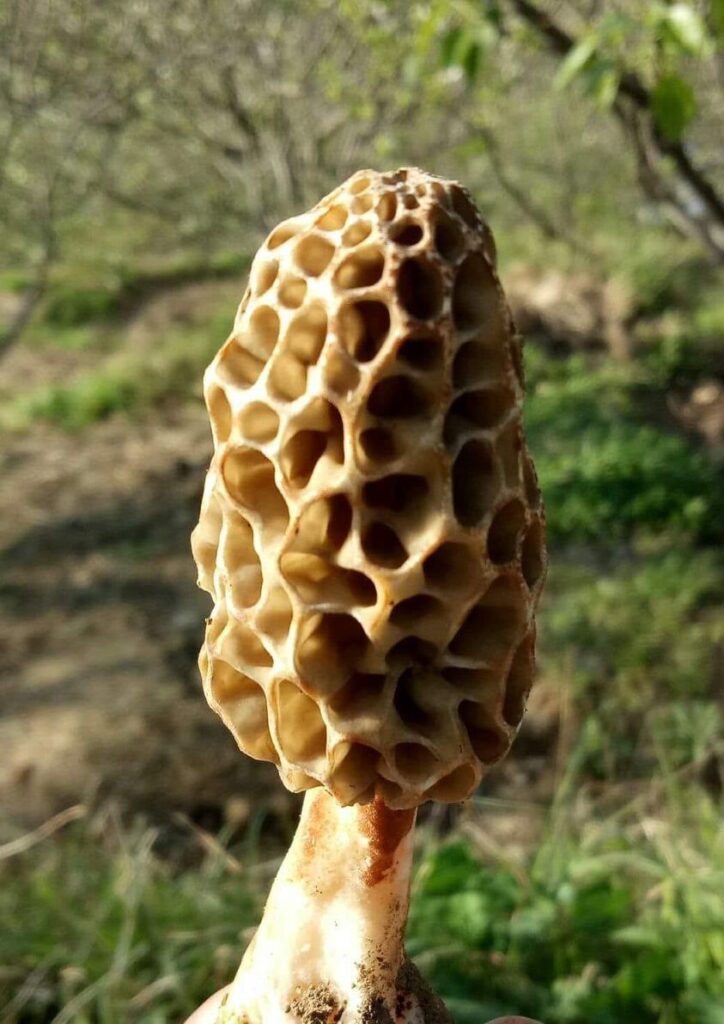
The source of sustenance was Guchhi (Morchella Esculenta), a herb in demand. Traders in Delhi buy it for Rs 6,500-7,000 per kilogram.
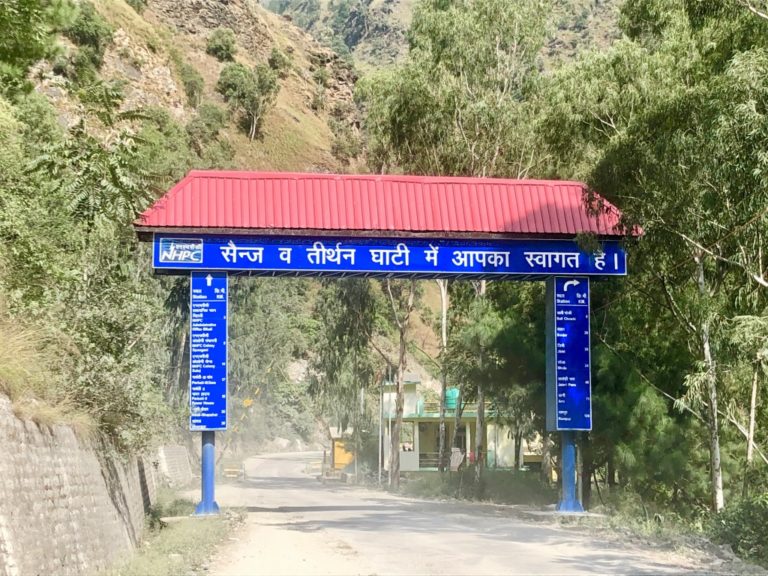
Unlike other popular tourist destinations in the Kullu Valley, Tirthan Valley retains much of its pristine and untouched charm. Far removed from the hustle and bustle of crowded destinations like Kasol and Manali, with their numerous cafés and live-music venues, Tirthan Valley offers a peaceful retreat. However, its amenities are relatively modest.
Tirthan Valley is famous for trout fishing, campsite experiences, and rustic homestays set in traditional Himachali fashion. The rainbow trout fish are abundant in the Tirthan River in Gushiani village.
A word of caution:
Before you indulge in fish-angling and touch that fishing rod, make sure you get the fishing permit from the HP Department of Fisheries office for a fee of INR 100.
Tirthan Valley is home to beautiful villages, for instance, Sarchi and Jamala. Sarchi village is set on vast flatland, with huge houses painted green, blue, and brown covered with slates to have a roof on the top. Many villages in this beautiful valley remain unexplored by tourists. But that is what the trekkers are doing—finding new hidden gems!
Imagine waking up to the gentle chirping of birds, the aroma of wood burning in a traditional chulha, and wisps of smoke escaping through the gaps in the slate roof. This is the charm of waking up in a Himachali village. Smoke rising through the fog—what a morning!
Don’t miss the opportunity to light a bonfire and invite some locals to join you in singing traditional folk songs. It could become one of the most memorable experiences of your stay.
Jibhi
Jibhi is a small village in Tirthan Valley that is now hugely popular among tourists. With numerous homestays and guesthouses, Jibhi offers plenty of accommodation options for both short and extended stays. The longer, the better!
Choose a room with a balcony. As you open the door, you will be greeted by breathtaking views of the mountains and the river. I am sure you will develop a feeling of guilt about having paid less to experience all this serenity & solace.
The road to Jibhi may seem narrow, particularly if you are not accustomed to driving in the hills. The steep ascent during the final 15 kilometres can be challenging for inexperienced drivers.
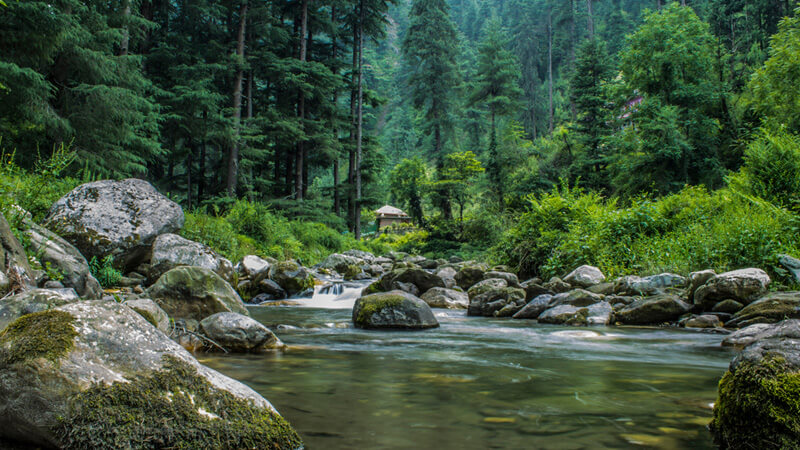
Who doesn’t harbor a love for mountain vacations? Jibhi is one place where you could sit in a flowing stream, feet relaxing in the stream, with breakfast spread on a table. How exciting does it sound?
Another attraction in Jibhi is Kulhi Katandi (Mini Thailand), the Tirthan Valley waterfall.
Well, experiencing such a setting is going to be the next level. Jibhi has secret waterfalls, dense forests, and treks to make your vacations worth it.
Ask your homestay guys & the tour guide to arrange a permit for trout angling. This is another experience to indulge in, Jibhi.
Apart from the conventional Volvo ride from Delhi, an option of reaching Jibhi by air is also available using the nearest airport,Bhunter.
Treks in Jibhi
Sarolskar Lake Trek
Raghupur Fort Trek
Tandi Village Trek- This is an alternate route to reach the village of Tandi through the forest, and the trek’s difficulty level is medium.
Best homestays in Tirthan Valley
Tandi village is approximately 6–7 km from Jibhi. This village is also known as the Tree House Village. Tandi village has several tree houses. The road from Jibhi to Tandi is narrow, and it is advisable to travel on this road during daylight. During winter, it is particularly advisable to use a four-wheel-drive vehicle.
Here is a list of homestays and treehouses near Jibhi:
- Mudhouse Hostel
- Heritage House
- Hotel Cedar View
- Nirvana, Tandi, Contact Number: 6230262606
- Jhony’s Tree House, Contact Number: 8219249560, 7624850149
- Whispering Pines Cottages, Contact Number: 7018328687
Twin Towers of Raila
What draws your eye are the tower-like structures perched on the hills. This is Raila village, situated approximately 30 kilometers from Sangrah, about a 1.5-hour drive away. These two watchtowers proudly stand atop the village, remaining remarkably intact.
Local inhabitants reported that two additional towers, unable to withstand the tremors of a previous earthquake, collapsed to the ground. They also mentioned that the existing two towers have suffered damage to their uppermost levels.
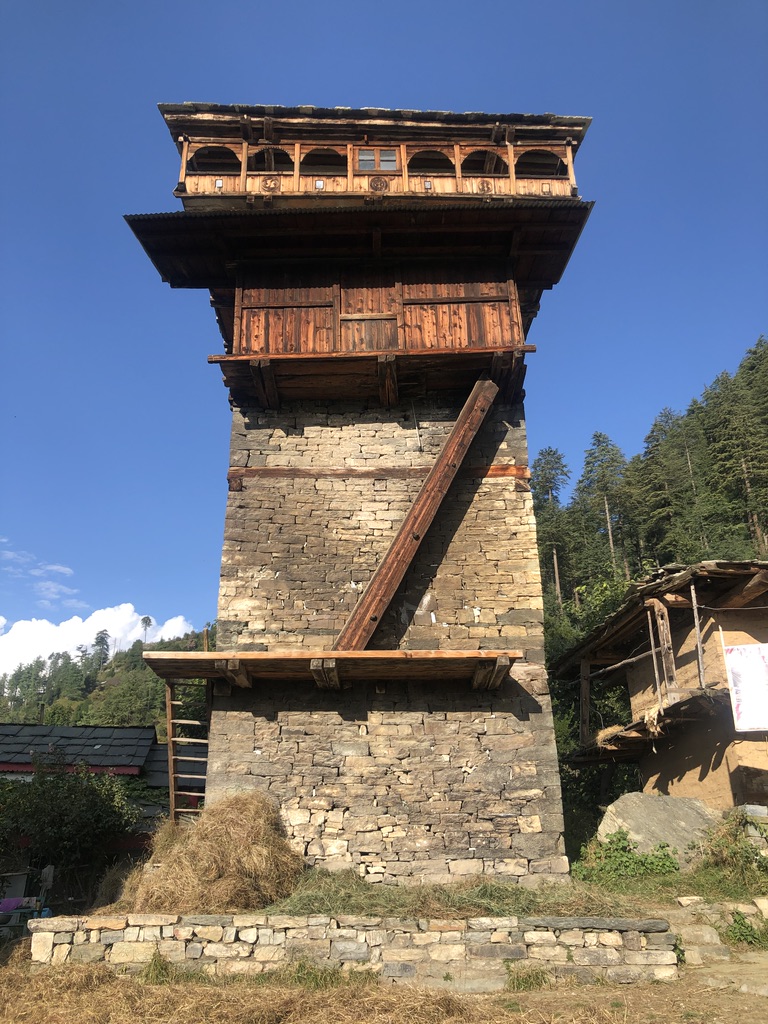
These two towers are engineering marvels for the reason that constructing something of this scale on hills is not an easy job.
A place to stay in Raila
The RabbitHouse Homestay. Here is the link—
https://goo.gl/maps/aXh1govJZH8EmMLH6
Sangrah
To reach Sangrah, take a diversion from the Aut tunnel towards the Great Himalayan National Park (GHNP). Sangrah is 30 km from this diversion point.
This diversion point is the gateway to popular tourist destinations like Jibhi, Jalori Jot, Sojha, Daliraya Kothi, Sainj, and Tirthan Valley.
Sainj Valley is dotted with small villages, and the commercial hotspot is the village of Sainj. Sainj is famous for its handicrafts, popular being the Kullu Shawl & cap.
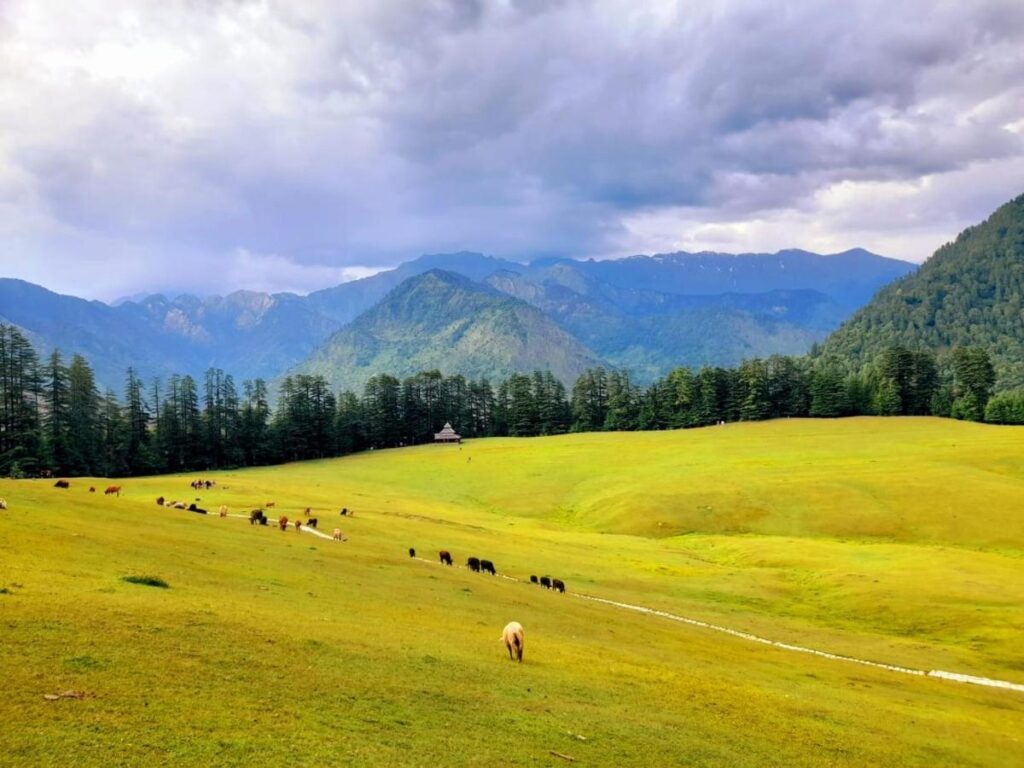
Sangrah is a holy place and has a connection with the Mahabharat era when the Pandavas were in exile. Shangarh is known for its vast meadows, which stretch across an expansive landscape. Shangarh Meadows is an expansive grassland framed by majestic snow-capped mountains. The Shangchul Mahadev temple on one side of the meadows is a great piece of vernacular architecture. Interact with the local residents to experience the culture and traditions of Shangarh village.
The village committee has set up rules to keep the meadows clean. They say Shangchul Mahadev has dictated these rules.
The meadow offers spectacular, picture-perfect views of the surrounding mountains, with the Pin Parvati range adding to the grandeur of the landscape.
While at Sangrah, do plan to visit Barshangarh Waterfall, which is 3km from Sangrah. The milky-white water cascading down the cliff creates a magnificent sight.
A place to stay in Sangrah
THE HOUSE OF OWN STORIES
https://www.google.com/travel/hotels/s/CCMwAQ3TJC8vt81w5
Best time to visit Tirthan & Sainj valleys
Avoid choosing the monsoon season at all costs. Opt instead for the summer months to fully savor the beauty of the Tirthan and Sainj valleys.
Summer offers pleasant weather, ideal for embarking on trekking adventures. While winter is also an option, some may find the harsh conditions harder to endure.
How to reach Tirthan & Sainj Valleys
By Air
Bhunter Airport (also known as Kullu Manali Airport), located at a distance of 50 km, is the nearest airport. You can catch connecting or direct flights, depending on availability, from Delhi or Chandigarh. On arriving at Bhuntar Airport, you can hire a taxi to reach your destination.
Suggested Read: Best Airports In Himachal Pradesh
By Rail
Choosing the nearest railway station can be a little complicated, as several options are available, including Ambala, Kalka, Kiratpur, and Shimla. The choice of these railheads will depend upon your travel itinerary.
By Road
Interstate buses are available from Delhi and Chandigarh to Manali. The diversion to Tirthan Valley is from the Aut tunnel. Aut is a small village on the Delhi-Manali highway.
Comments
Thanks for sharing your thoughts!
Thank you for your good blog as always.Have a great day today.
샌즈카지노
Hello to all, how is everything, I think every one is getting more from this web site,
and your views are nice for new visitors.
Regards! My name is Ridge and I’m happy to be at himachaltourisminfoblog.com.
Regards! My name is Ridge and I’m pleased to be at himachaltourisminfoblog.com.
Top site ,.. amazaing post ! Just keep the work on !
Fantastic web site. Plenty of useful info here. I’m sending it to a few pals ans also sharing in delicious. And obviously, thanks for your sweat!
If you should you have any suggestions or tips for my new blog printable weekly calendars please share!
Pingback: Far-Off Yet Best Villages to explore in Himachal Pradesh